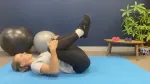
A specific underlying back condition can be an important factor that influences preference for mattress types and sleep positions
The following are sleep position suggestions for specific painful back conditions:
Osteoarthritis

Sleeping on the side relieves pressure on the facet joints, decreasing osteoarthritis pain.
Sleeping sideways with the knees curled up (in the fetal position) is generally preferable. This position opens up the facet joints in the spine and can relieve corresponding pressure. Alternatively, sleeping in a reclining chair or an adjustable bed elevates the head and knees, and so relieves pressure on the facet joints.
See Facet Joint Osteoarthritis
Degenerative disc disease
Sleeping on the stomach is typically preferred, as this position can relieve pressure on the disc space. People with degenerative disc disease may feel most comfortable using a relatively firm mattress while placing a flat pillow under the stomach and hips. This can further open up the disc space and reduce stress on the lower back.
Another option is to sleep on the back, with the upper body slightly elevated by using a wedge pillow or an adjustable bed. In this position it is important to support the knees in a slightly bent position.
See Using an Adjustable Bed for Back Pain
Spinal Stenosis
With this condition, it may be preferable to sleep on the sides with the knees curled up (in the fetal position). This helps relieve pressure on the nerve root. Sleeping in a reclining chair or an adjustable bed that allows the head and knees to remain elevated can also relieve pressure on the nerve.
Bursitis
A condition such as inflammation of the bursa over the hips (greater trochanteric bursitis) can be aggravated by pressure from a mattress that is too firm. If the mattress is too firm, a new mattress with thick padding on top—also called a pillow-top mattress—can reduce pressure on the hip.
See How to Evaluate a Mattress
As a less expensive alternative, covering an older mattress with a new pillow-top can provide additional cushioning.
Isthmic spondylolisthesis
Pain from isthmic spondylolisthesis may be relieved by sleeping in a reclining position. This position can be tested by using pillows under the back, neck, and head to support the body as if it were in a reclining chair.
See Pillow Support and Comfort
Herniated lumbar disc
The preferred sleep position depends in part on the position of the disc. For a paracentral disc herniation (most common), people tend to do better lying on the stomach. For a foraminal herniated disc, sleeping on the side in a fetal position often brings relief.
Sleeping in a Reclining Position
Sleeping in a reclining position is preferable for sleeping with lower back pain and/or sciatica. Specifically, pain that feels worse when standing up straight, and better when bending forward, is a sign that sleeping in a supported reclining position may be beneficial. Options for support while sleeping in a reclining position include:
Adjustable Bed. With this type of bed, the upper and lower portions of the bed can be raised and lowered in a customized fashion (typically powered by a remote control). There are many advantages to an adjustable bed, including the ability to easily raise and lower portions of the bed throughout the night. Adjustable beds are available at a variety of price points and designs.
- Reclining chair. A recliner allows the back to be supported and the legs to be elevated, but it does not typically provide the same level of customization as an adjustable bed. Reclining chairs are available with all kinds of coverings, including leather. Additionally, some reclining chairs have options such as heating, massage, and lift-assistance (helping one get up out of the chair).
Wedge cushion. A large foam cushion in the shape of a wedge can be a less expensive alternative to either of the above. Moreover, purchasing a wedge cushion before buying either of the other options is a good way to determine if a more expensive option is worth the investment.
Elevating the knees by placing a pillow under them, while at the same time lying flat on a bed, can also help relieve back pain caused by many conditions.
Sleep Comfort While Recovering from Spine Surgery
Many patients recovering from spine surgery also find that lying on their backs with a small pillow under the knees is best sleep position.
See Practical Advice for Recovering from Back Surgery
Patients recovering from surgery—and anyone in need of extra cushioning—may benefit from adding a soft pillow-top to the bed as well.
Using an adjustable bed or recliner is another option to enhance patient comfort during postoperative recovery. Recliners and adjustable beds not only make it easier for many people to sleep, they also make getting out of bed less of an ordeal.
Adjustable beds and recliners may be rented from a medical supply retailer.
For more information, see Choosing the Best Mattress for Lower Back Pain